Single Vision, Progressive, Bifocal: Choosing the Right Lenses for Your Eyes
Single vision, progressive, and bifocal lenses are the three most common types of corrective eyewear, each designed to address different vision needs. Whether you need clear distance vision, comfortable reading, or seamless focus for all distances, understanding these options is essential. This guide will explore how each lens works, their benefits, and which one is most suitable for your lifestyle and vision requirements.
Many people turn to progressive lenses because they offer a modern, versatile solution that corrects multiple distances without the visible lines found in bifocals. These lenses are particularly helpful for adults over 40 experiencing presbyopia, providing a smooth transition from near to far vision for reading, computer use, and driving.
What Are Single Vision Lenses?
Single vision lenses have one prescription across the entire lens surface, providing correction for a single visual distance—either near, intermediate, or far.
Benefits of Single Vision Lenses
- Clear vision for one distance
- Simple to use with minimal adaptation
- Lightweight and affordable
Who Should Use Single Vision Lenses
- Children and young adults with nearsightedness or farsightedness
- Individuals who only require vision correction for one distance
- People who prefer a straightforward, low-maintenance lens
Single vision lenses are the most common starting point for many wearers because of their simplicity and cost-effectiveness.
Understanding Bifocal Lenses
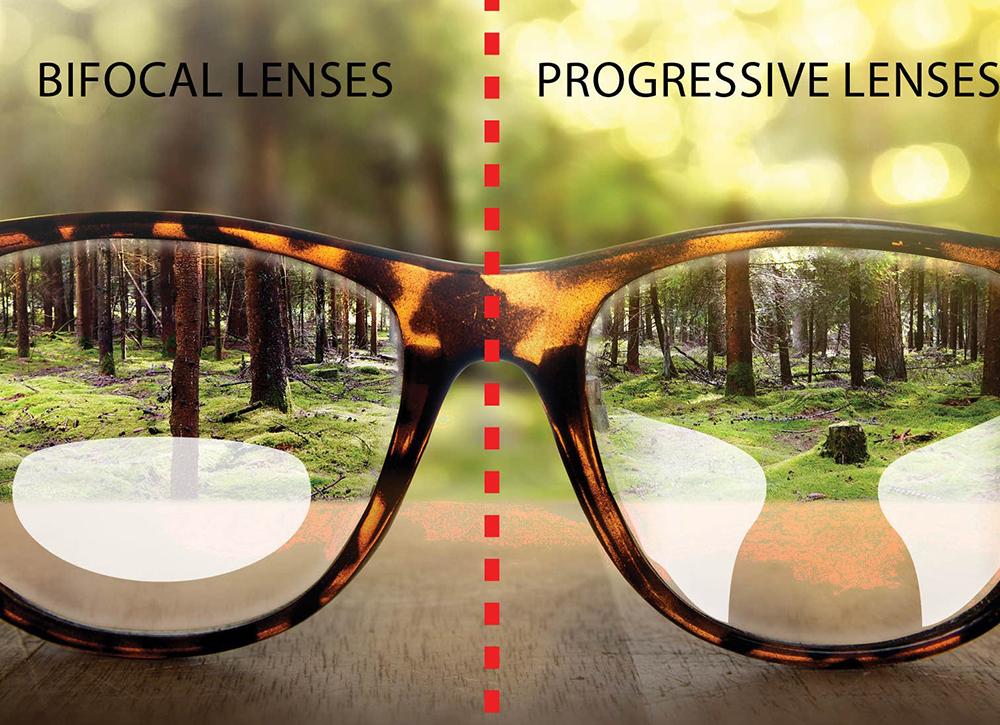
Bifocal lenses feature two distinct prescription areas separated by a visible line. The top portion is typically for distance vision, while the lower portion helps with near tasks, such as reading or smartphone use.
Advantages of Bifocal Lenses
- Clear correction for both near and distance vision
- Easier adaptation compared to progressive lenses
- More affordable than progressive options
Limitations of Bifocal Lenses
- Visible dividing line may be unappealing
- Abrupt transition between prescription zones
- No intermediate vision support
Bifocal lenses are suitable for those who want near and far vision correction without the complexity or cost of progressive lenses.
What Are Progressive Lenses?
Progressive lenses provide a line-free alternative to bifocals, offering multiple prescription zones in a smooth gradient. The top area is for distance, the middle for intermediate tasks such as computer work, and the bottom for reading.
Advantages of Progressive Lenses
- Seamless vision across multiple distances
- Modern, aesthetically pleasing design with no visible lines
- Ideal for multitasking and professional use
Considerations for Progressive Lenses
- Higher cost compared to single vision and bifocals
- Adjustment period may be needed
- Slight peripheral distortion can occur initially
Progressive lenses are perfect for those who want a versatile eyewear solution that eliminates the need for multiple pairs of glasses.
Comparing Single Vision, Bifocal, and Progressive Lenses
| Feature | Single Vision | Bifocal | Progressive |
|---|---|---|---|
| Distance Corrected | One distance | Near and far | Multiple distances |
| Visual Lines | None | Visible line | Line-free |
| Adaptation | Fast | Moderate | Adjustment period required |
| Cost | Affordable | Mid-range | Higher cost |
| Ideal Users | One-distance correction | Near + far correction | Seamless vision at all distances |
How to Choose the Right Lens for Your Lifestyle
Selecting the right lenses involves evaluating your age, daily activities, comfort, and budget.
Age Factor
- Under 40: Single vision lenses are usually sufficient
- Over 40: Progressive or bifocal lenses may be necessary due to presbyopia
Lifestyle Considerations
- Heavy computer use → Progressive lenses
- Frequent reading → Bifocal or progressive lenses
- Driving and outdoor activities → Single vision or progressive lenses
Comfort and Adaptation
Some people prefer lenses that are easy to adapt to, while others prioritize versatility and seamless vision across distances.
Budget Considerations
Progressive lenses provide the most flexibility but are more expensive. Single vision lenses are the most cost-effective, and bifocals offer a middle ground.
Pros and Cons of Each Lens Type
Single Vision
Pros: Affordable, simple to use, clear vision, lightweight
Cons: Only corrects one distance, may require multiple pairs
Bifocal
Pros: Corrects near and far vision, relatively easy adaptation, mid-range cost
Cons: Visible line, abrupt transition, no intermediate vision
Progressive
Pros: Seamless vision at all distances, aesthetically modern, convenient
Cons: Higher cost, adaptation period needed, slight peripheral distortion for some users
Tips for Adjusting to Multifocal Lenses
If you choose bifocal or progressive lenses, adapting to them may take time:
- Wear new glasses consistently to speed adjustment
- Move your head instead of just your eyes when changing focus
- Give yourself one to two weeks for full adaptation
- Contact your optician if discomfort persists
With regular use, most people adapt successfully to multifocal lenses.
How Eye Care Professionals Help
Optometrists consider multiple factors before recommending lenses:
- Vision prescription and eye health
- Age and lifestyle
- Hobbies and occupational needs
They may also suggest lens enhancements like:
- Anti-reflective coatings
- Blue light protection
- Scratch resistance
- UV protection
These coatings improve comfort, reduce eye strain, and increase the lifespan of your lenses.
When to Upgrade Your Glasses
You may need new lenses if you experience:
- Blurred vision at multiple distances
- Eye strain or headaches
- Difficulty focusing between distances
- Trouble reading or viewing screens clearly
Regular eye exams every 1–2 years ensure your prescription is up to date and your eyes remain healthy.
Final Thoughts
Single vision, bifocal, and progressive lenses each offer unique benefits tailored to different vision needs. Single vision lenses provide simplicity and affordability, bifocals offer near-and-far correction with minimal learning curve, and progressive lenses deliver seamless vision across multiple distances with modern aesthetics.
Your choice should depend on age, daily activities, vision requirements, and budget. Consulting an eye care professional ensures optimal comfort, clarity, and long-term eye health. Understanding these differences empowers you to select the lenses that best support your lifestyle and keep your vision sharp throughout the day.