
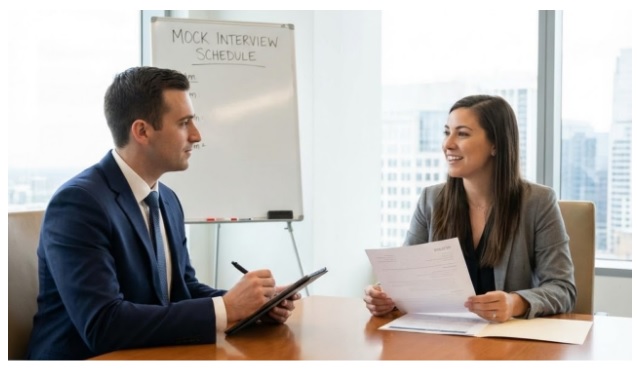
MBA Mock Interviews: Essential Practice for Business School Interview Success
MBA mock interviews represent essential preparation components, significantly improving actual interview performance and business school admission prospects. Mock interviews simulate authentic interview dynamics, enabling candidates to practice responses, receive feedback, build confidence, and refine delivery before high-stakes actual interviews. Research demonstrates that candidates participating in MBA mock interviews substantially outperform unprepared candidates, with practice correlating directly to interview excellence and admission success.
This comprehensive guide explores mock interview benefits, effective practice strategies, leveraging feedback, and maximizing mock interview investments for MBA admission success.
Understanding Mock Interview Significance
Simulation of Authentic Interview Dynamics
Mock interviews replicate authentic interview conditions—time pressure, unexpected questions, evaluative atmosphere, formal settings. Simulation prepares candidates for actual interview stress and dynamics.
Confidence Building Through Practice
Regular mock interview practice builds confidence through successful response delivery, positive feedback reinforcement, and demonstrated competency. Confidence transforms anxiety into productive nervous energy.
Performance Improvement Through Iterative Practice
Multiple practice rounds with feedback enable skill refinement. Progressive improvement through iteration demonstrates genuine development and increases admission prospects.
Reduced Interview Anxiety and Stress
Thorough preparation through mock interviews reduces interview anxiety. Familiarity with procedures and confidence in response quality diminish stress significantly.
Types of Mock Interviews
Peer-to-Peer Mock Interviews
Candidates partner with peers conducting mutual mock interviews. Cost-free approach enables frequent practice though feedback quality depends on peer coaching knowledge.
Professional Coach Mock Interviews
Professional coaches conducting mock interviews provide expert feedback, strategic guidance, and authentic interviewer simulation. Professional approach yields superior feedback quality and accelerated improvement.
Online Mock Interview Platforms
Digital platforms offering structured mock interviews, AI analysis, and video recording enable convenient, flexible practice. Platform variety provides diverse practice options.
Admissions Officer Mock Interviews
Some MBA programs offer official mock interviews conducted by admissions officers. Official interviews provide authentic simulation and insider assessment insights.
Effective Mock Interview Preparation Strategy
Pre-Mock Interview Preparation
Before mock interviews, prepare thoroughly—develop responses to common questions, research target programs, practice delivery. Preparation enables genuine simulation of actual interview conditions.
During Mock Interview Performance
During mock interviews, perform authentically—respond thoughtfully, maintain professional demeanor, ask meaningful questions. Authentic practice yields realistic feedback.
Post-Mock Interview Analysis
After interviews, review video recordings, analyze feedback, identify improvement areas, and plan refinement. Thorough analysis maximizes learning from practice rounds.
Leveraging Feedback for Improvement
Video Analysis and Self-Assessment
Recording mock interviews enables video analysis identifying delivery strengths, communication patterns, and areas requiring refinement. Visual feedback creates concrete improvement understanding.
Coach Feedback and Guidance
Professional coach feedback highlights response quality, delivery effectiveness, and strategic improvements. Specific feedback enables targeted refinement.
Iterative Improvement Cycle
Implement feedback in subsequent mock interviews, measuring improvement. Iterative cycles create meaningful development progression.
Mock Interview Question Categories
Background and Personal Narrative Questions
Practice delivering clear, compelling responses to background questions. Develop concise narratives synthesizing professional background and program motivation.
Behavioral and Leadership Questions
Use STAR methodology structuring responses emphasizing situations, actions, and results. Practice delivering complete behavioral responses addressing interviewer concerns.
Program-Specific Questions
Practice discussing target programs specifically—referencing curriculum, faculty, culture, opportunities. Program-specific preparation demonstrates genuine interest.
Challenging and Pressure Questions
Practice responding to difficult questions, addressing weaknesses, and handling unexpected topics. Pressure practice prepares for challenging interview moments.
Frequency and Duration Recommendations
Minimum Practice Volume
Effective preparation typically requires 8-12 mock interviews minimum. Volume enables practicing diverse questions and refining delivery substantially.
Spacing and Timing
Space mock interviews over time rather than clustering them. Spacing enables reflection, feedback implementation, and genuine skill development between sessions.
Final Intensive Practice
Conduct intensive mock interview sessions immediately preceding actual interviews. Final practice refreshes preparation and reinforces confidence.
Selecting Effective Mock Interview Partners
Coach Qualifications and Experience
Select coaches with MBA interview experience, strong track records, and proven coaching effectiveness. Coach quality directly impacts feedback quality.
Diverse Interviewer Perspectives
Practice with diverse mock interviewers representing different interview styles. Diversity practice builds adaptability.
Constructive Feedback Approach
Select partners providing constructive, specific feedback identifying strengths and improvement areas. Supportive feedback maintains motivation and confidence.
Common Mock Interview Mistakes to Avoid
Insufficient Preparation
Unprepared mock interviews fail to provide realistic simulation. Thorough preparation ensures authentic practice value.
Generic or Scripted Responses
Overly rehearsed responses feel inauthentic. Balance preparation with conversational delivery.
Ignoring Feedback
Failing to implement feedback wastes mock interview value. Committed feedback implementation maximizes practice benefits.
Single Mock Interview Over-Reliance
Single mock interviews provide limited perspective. Multiple diverse interviews enable comprehensive preparation.
Technology and Tools for Mock Interviews
Video Recording Equipment
Quality video recording enables meaningful self-assessment. Standard smartphone video suffices for analysis purposes.
Online Interview Platforms
Platforms like InterviewBit, Pramp, or program-specific platforms offer structured mock interview environments. Platform variety enables flexible practice.
Feedback Tools and Documentation
Document feedback systematically, track improvements, and maintain records enabling progression assessment. Documentation supports accountability and targeted refinement.
Post-Mock Interview and Pre-Actual Interview Strategy
Reflection and Learning Integration
After comprehensive mock interviews, reflect on learning—identifying development areas, celebrating improvements, and planning continued refinement.
Confidence Reinforcement
Final preparation week emphasizes confidence reinforcement through reviewing narratives, recalling practice successes, and visualizing interview excellence.
Minimal Last-Minute Cramming
Avoid excessive last-minute preparation. Instead, maintain confidence through light review and stress management.
Conclusion
Comprehensive MBA mock interviews practice representing essential preparation components significantly improving actual interview performance and business school admission prospects. By conducting 8-12+ mock interviews, implementing feedback systematically, practicing diverse question categories, and maintaining authentic performance throughout practice rounds, candidates build genuine interview competency and confidence. Mock interviews transform interviews from anxiety-inducing challenges into confident opportunities showcasing authentic leadership potential, communication abilities, and genuine program fit compelling admissions officers toward acceptance decisions.